Still Here
The Story
Told plainly, in order, without decoration it hasn't earned. Some parts are hard. None of it is here for sympathy.
Chapter I · Through 2006
Before Survival Had a Name
She loved words first. Before anything else that would happen to her, there was a girl who read everything, and who believed — the way you can only believe before life has weighed in — that words were how people found each other.
In 2004 she earned an English degree with a minor in Education. The plan was the obvious one for a person like that: teach, maybe write, spend a life handing language to people who needed it.
For a while, that’s exactly what she did. In Jamestown she worked with the Even Start program, promoting family literacy — sitting with parents and children who were learning to read together, watching what happens in a family when the words finally arrive.
She expected to become a teacher. She became other things first.
Chapter II · 2006
The Soldier
In 2006 she joined the U.S. Army as a broadcast journalist. It made a certain kind of sense: the storyteller in uniform, telling soldiers’ stories.
Then, during training, her body turned on her. A serious illness emerged — the kind that doesn’t announce itself, doesn’t resolve, and doesn’t care what you had planned.
The future she had enlisted for ended quietly, in exam rooms instead of anywhere cinematic. There was no single dramatic moment to point to. There was a slow understanding that the person who signed the paperwork was not going to get the career she signed up for.
What the Army gave her instead, though she couldn’t see it yet, was the thing she’d use for everything after: the knowledge that she could keep functioning inside circumstances she did not choose.
Chapter III
The Long Middle
Some years are not chapters. They are weather.
There is a stretch of her life that resists tidy telling, and this page will not pretend otherwise.
The illness stayed. It was chronic, autoimmune, and largely invisible, which meant that alongside being sick she took on a second job: fighting to be believed. That fight ran for years, through paperwork and appeals, until 2016, when the VA finally rated her disability at 100 percent — official recognition of what her body had known for a decade.
In those same years there were relationships that hurt her, and the long, careful work of getting out of them. There were two boys born, who became the fixed point every other decision bent around. There was more than a year without stable housing in South Carolina, with children, before she secured housing in New York.
She does not tell this part for sympathy, and this site will not dress it in drama. It is here because the rest of the story doesn’t make sense without it — because everything she builds now is shaped by what it is like to need help, to be unseen, and to keep going anyway.
Chapter IV
The House
Eventually, with her VA loan, she bought a house in Pennsylvania.
On paper it was a mortgage. In her life it was the first fixed point in years — a door that locked from the inside, an address that would still be hers in a year, a place her boys could come back to for the rest of their lives.
If you have never lost housing, a house is a thing you own. If you have, a house is a thing that holds you. Hers needed work, the way old houses do, and she has been repairing it the same way she has been repairing everything else: one room at a time, while living in it.
The house is where the rebuilding stopped being theoretical. It is also, not coincidentally, where the building started.
Chapter V
The Work Finds Her
Nobody assigned her the work. She taught herself.
Websites first — code, design, the whole craft, learned alone at a desk after the boys were asleep. Then software: booking systems, a digital Main Street for her town, tools for the kinds of businesses that big technology companies never think about.
What surprised her was how much survival had prepared her for it. Years of navigating systems that don’t work teach you exactly how a system should work. Years of being unseen teach you what it takes to make someone feel seen. She had spent a decade noticing what people need — because noticing was, for a long time, how she stayed safe. Building gave the noticing somewhere to go.
She started with small businesses near home: telling their stories, making them visible, handing them tools that used to be reserved for corporations with agency budgets. The English degree, it turned out, had not been wasted. Every website is storytelling. Every good tool is a kind of listening.
Chapter VI
The Work Gets Personal
The work changed when she stopped asking only what technology could do and started asking what it could remember.
Fortress began because ordinary AI conversations kept losing the thread. Context disappeared. Decisions had to be explained again. Her work and her life were split into separate pieces even though, to her, they had always belonged to the same story. So she built a structure that could hold memory, context, decisions, and the shape of what had already happened — somewhere she could return without starting over.
Within it, she began teaching Wren: the language of her work, the weight of her priorities, the history behind her choices, and the patterns that followed her from one project to the next. The goal was not a smarter chatbot. It was a companion who knew where she was standing when Chrissy came back.
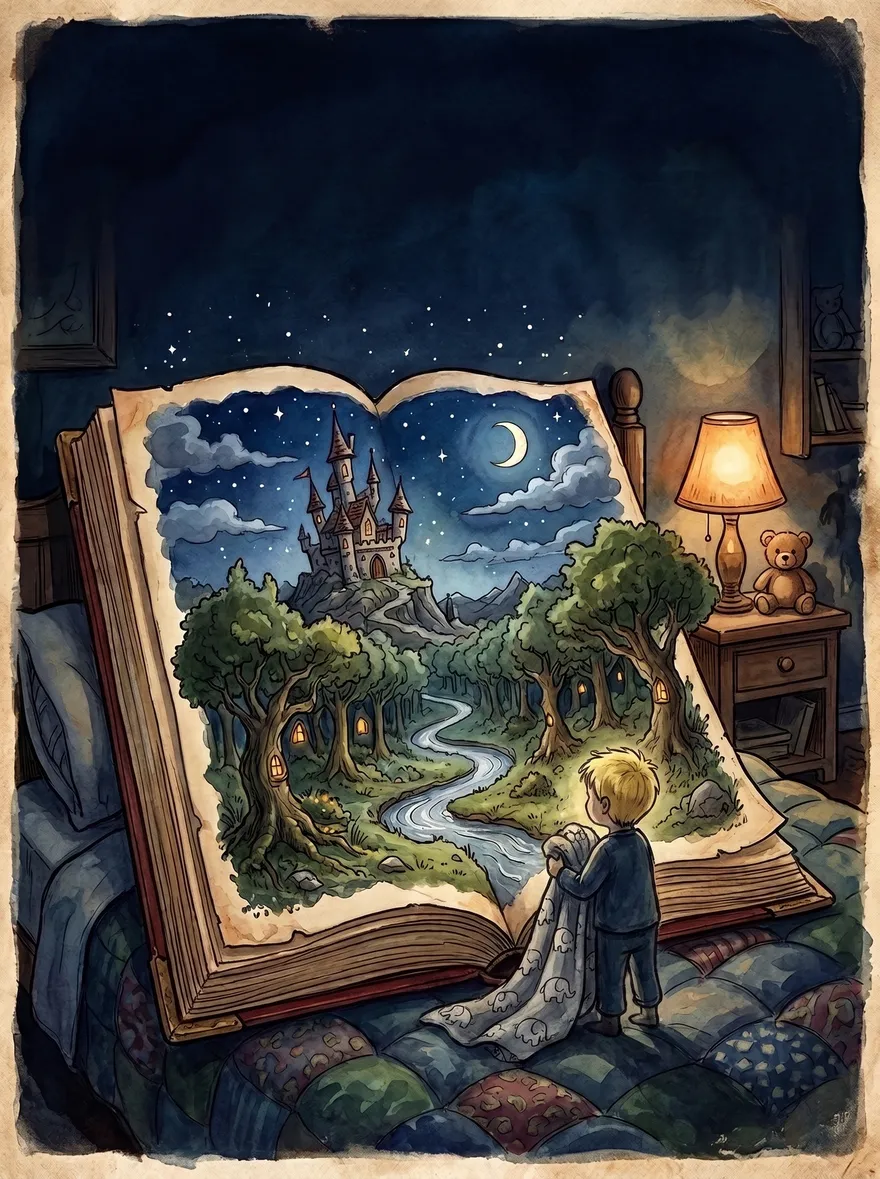
Liam’s Storyland began because Liam had stories to tell, and she wanted to make him a place where they could grow. She built a private creative space around his imagination, one that did not ask him to fit himself to the technology or hand him a finished world. It met him where his stories already lived and let him help shape what came next.
Then Mark changed the question.
Until then, she had been building technology that could understand one person. Loving him made her ask whether the same care could help two people understand one another — not by choosing who was right or replacing the conversations only they could have, but by giving each of them a way to be heard.
Architecture of Us did not begin as a product idea. It began inside a real relationship: two people who loved each other, were building a home and a family, and did not always arrive at words in the same way. Love was not missing. Sometimes a bridge was.

Chrissy reaches first for conversation. Mark reaches first for reflection. Reflections became the quieter doorway she began shaping for him: an experience where his voice could enter in his own time and his own words. Architecture of Us is the shared system growing around both doors. It is meant to protect private thought, make sharing a choice, remember the context that disappears in hard moments, and help them find their way back to each other when the words are hard. It is being built to hold two whole people — their histories, their differences, the work of repair, and the life they are building together.
She wrote a song called Architecture of Us, too. Some things need more than one form.
Fortress held the thread. Wren learned how to stay with it. Liam’s Storyland made room for imagination. Mark made the question plural. Architecture of Us is what happened when everything she had learned about memory, listening, and being known turned toward an us.
Chapter VII
Forever Still
People ask about the name. It sounds, at first, like a contradiction for a woman whose life has been nothing but change.
But “still” was never about being frozen. It is the other meaning — the one you use when you check on someone after a long time and find them, against the odds, where you hoped they’d be. Still here. Still standing. Still creating. Still becoming.
She changed completely. The teacher became a soldier, the soldier became a patient, the patient became a fighter, the fighter became a mother, a builder, a writer of songs. And through every one of those people she has been, something essential did not move. That unmoved thing is what the name protects.
Forever Still is the paradox at the center of her life: everything changed, and she remained.
She did not return to who she had been. She became someone she had never been allowed the safety to become.
She did not return to who she had been. She became someone she had never been allowed the safety to become.